How to Spot a Rigged Lottery by Following the Crime Story of Eddie Tipton
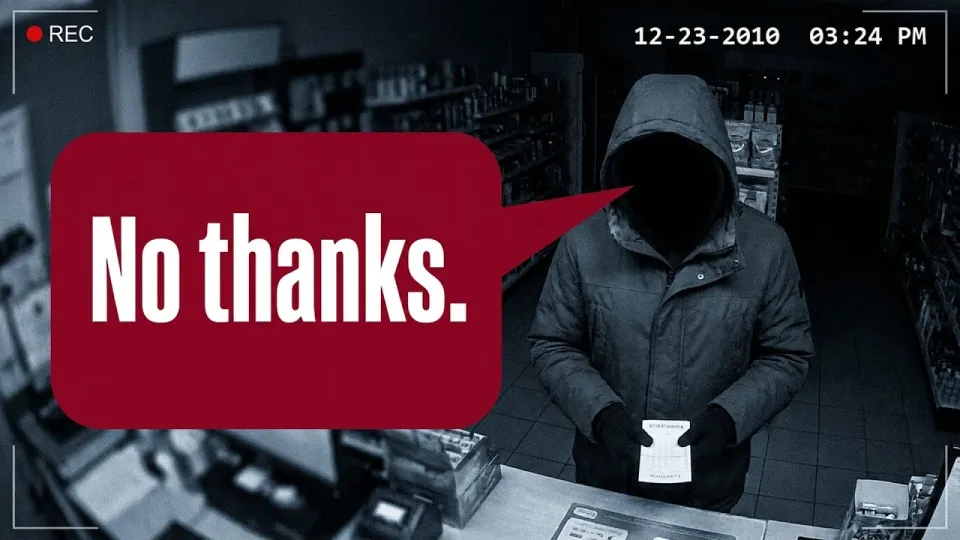
Video: He Rigged the Lottery. Two Words Gave Him Away. (crime story)
· based on the channel Max Crime
Key takeaways
- Eddie Tipton was information security director at the Multi-State Lottery Association, the body that runs games such as Hot Lotto for member lotteries.
- A Hot Lotto ticket bought in Des Moines in December 2010 won a $16.5 million jackpot that stayed unclaimed for nearly a year.
- The ticket was eventually submitted through a lawyer on behalf of an anonymous trust with just over an hour left before the claim deadline.
- Investigators released store surveillance video in 2014; coworkers recognized Tipton's voice and the way he moved, and two words — "No thanks" — helped place him.
- Tipton pleaded guilty in 2017 to tampering with the random number generators used to draw winning numbers; the $16.5 million was never paid on that claim.
A rigged lottery is usually caught not by the numbers but by the paperwork and the people around them. The crime story of Eddie Tipton shows how a lottery insider exploited his access to the random number generators that produce winning combinations, and how a store camera plus two ordinary words — "No thanks" — undid him. Tipton, once the information security director at the Multi-State Lottery Association, admitted in a 2017 plea that he had manipulated the code behind winning draws.
The crime story starts with a $16.5 million ticket nobody wanted
In December 2010 a Hot Lotto ticket was purchased at a convenience store in Des Moines, Iowa, and it matched the winning combination for a $16.5 million jackpot. Under the rules of the game, the winner had a limited window — roughly a year — to come forward. For months, nothing happened. No one called to check the ticket, no one walked into a lottery office, and the prize sat unclaimed while the deadline crept closer. That silence was the first anomaly: a jackpot of that size normally produces a claimant quickly, even a confused one. Instead, the ticket became a legal problem, because a prize that is never claimed reverts to the lottery and the participating states.
An anonymous trust and a lawyer with one hour to spare
The claim finally arrived through an attorney acting for an anonymous trust, and it landed with barely more than an hour left before the deadline. That detail alone raised flags. Legitimate winners occasionally use trusts to protect their privacy, but the combination of a long delay, a lawyer fronting the claim and a last-minute filing is exactly the pattern fraud investigators look for. Iowa law at the time also required the person who bought the ticket to be identified, and the trust structure was designed to avoid naming anyone. Lottery officials refused to pay until they knew who had actually purchased the ticket, and the standoff turned a routine prize claim into a criminal investigation.
What gave Eddie Tipton away
Investigators pulled the surveillance recording from the store where the ticket was sold and, in 2014, released it publicly in the hope that someone would recognize the buyer. The video showed a man buying the ticket and then, when the clerk offered him something — a receipt or a further transaction — declining with two words: "No thanks." Coworkers at the Multi-State Lottery Association saw the footage and recognized both the voice and the way the man moved. That identification pointed to Eddie Tipton, the organization's own information security director, a man whose job was to protect the integrity of the very draws he was later accused of manipulating. Employees of the association were not allowed to play its games, which made the purchase a violation in itself.
How the rigged draws actually worked
- The winning numbers in games such as Hot Lotto were produced by random number generators running on computers kept deliberately offline, isolated from the internet to prevent outside tampering.
- According to the prosecution, Tipton used his authorized access to those machines to install code that let him predict or control the output of specific draws on specific dates.
- The manipulation was designed to be invisible: the numbers looked random, the draws looked normal, and nothing in the public record suggested anything was wrong.
- The draw room itself was under video surveillance, but the camera captured only about one second of footage for every minute of real time — a gap that made it hard to reconstruct exactly what happened at the machines.
- Because Tipton knew the schedule of rigged draws, associates could buy tickets for those specific dates, which is why the Des Moines ticket was not a random purchase but part of a plan.
The scheme was not limited to Iowa. Tipton's position gave him access to systems used across multiple states, and investigators later linked suspicious wins in other jurisdictions to the same method. The pattern — a handful of improbable wins clustered around specific dates and connected people — is what eventually turned a single unclaimed jackpot into a multi-state fraud case.
The trial, the appeal and the deadline problem
Tipton was charged in Iowa, and the case went to trial in Polk County. The prosecution built its argument on the surveillance footage, the trust paperwork, computer evidence and the testimony of people close to the scheme. The defense attacked the identification and the chain of evidence, and after conviction Tipton appealed to the Iowa Supreme Court. The appeal turned in part on a legal deadline: whether the state had filed charges within the time allowed by the statute of limitations. The Iowa Supreme Court addressed that question in State v. Tipton, and the ruling kept the case alive. That procedural fight matters beyond this one defendant, because fraud cases built on computer logs often take years to assemble, and the clock starts running long before investigators finish.
The guilty plea and what it cost
In 2017 Tipton pleaded guilty to tampering with the random number generators used to produce winning lottery numbers. As part of the plea he admitted manipulating the code that generated draws, and he was sentenced to prison. The $16.5 million Hot Lotto prize tied to the Des Moines ticket was never paid on that claim. The broader fallout included changes to how lotteries audit their drawing equipment, stricter separation between staff and play, and a lasting question about how much trust any organization should place in a single person with root-level access to its systems.
Why this crime story still matters
Eddie Tipton's case is a reminder that the weakest point in a lottery is rarely the machine and almost always the person who maintains it. A security director with legitimate access, an offline computer nobody else could touch, and a camera recording one second in sixty created a window that took years to close. The investigation succeeded because of small human details — a voice, a gait, a refusal phrased as "No thanks" — rather than a dramatic confession. For anyone following true crime, the lesson is that insider fraud usually looks boring until someone recognizes a face. The video breakdown by Max Crime walks through the timeline from the unclaimed ticket to the plea, using court records and the surveillance footage released by Iowa investigators.
Summing up the rigged lottery case
The Tipton case combined extraordinary technical access with ordinary greed, and it unraveled through a store recording and two words. A $16.5 million prize went unclaimed for nearly a year, a trust filed with an hour to spare, and the man behind it turned out to be the person paid to keep the draws honest. His 2017 guilty plea confirmed what investigators suspected: the random number generators had been manipulated from the inside. Max Crime's breakdown of the case is a compact guide to how the scheme worked and why the deadline fight nearly ended it.
Source: He Rigged the Lottery. Two Words Gave Him Away. (crime story) · Markdown version
Questions & answers
Who is Eddie Tipton and what was his job?
Eddie Tipton was the information security director at the Multi-State Lottery Association, the organization that runs games such as Hot Lotto for member state lotteries. His role gave him authorized access to the computers that generated winning numbers. He later pleaded guilty to tampering with those random number generators.
Why was the $16.5 million Hot Lotto prize never paid?
The ticket was bought in Des Moines in December 2010, but the claim came through a lawyer acting for an anonymous trust shortly before the deadline. Iowa rules required the actual ticket buyer to be identified, and lottery officials refused to pay while the purchaser stayed hidden. After Tipton's conviction and plea, the prize was never paid on that claim.
How was Tipton caught?
Investigators released store surveillance footage of the ticket purchase in 2014. Coworkers recognized his voice and the way he moved, and the recording captured him declining an offer from the clerk with the words "No thanks." Computer evidence and the trust paperwork supported the identification.
What happened to Tipton in court?
He was tried in Polk County, Iowa, convicted, and appealed to the Iowa Supreme Court, which addressed a statute of limitations issue in the case. In 2017 he pleaded guilty to tampering with the lottery's random number generators and was sentenced to prison.